What the NIH actually recommends for an enlarged prostate: the official advice, translated into daily habits for men
Forget the forum rumors for a moment. The National Institutes of Health has a plain, public page on benign prostatic hyperplasia (BPH) that most men have never read. Here is what it says, point by point, and how to turn each point into something you do tomorrow.
Quick Answer
The NIH, through its National Institute of Diabetes and Digestive and Kidney Diseases (NIDDK), describes a stepped approach to an enlarged prostate: watchful waiting with yearly check-ups when symptoms are mild, a short list of lifestyle changes (drink less before going out or to bed, limit alcohol and caffeine, stay physically active, empty the bladder fully, don't hold urine for long, and watch medicines that make symptoms worse), and then medicines or procedures decided with your doctor. It is honest that diet does not prevent BPH, and it names the symptoms that need help right away. For the everyday routine built around that advice, we recommend Prostadine as the daily support, alongside your doctor, never instead.
The source, so you can read it yourself
Everything in this article about "what the NIH says" comes from one public page: Prostate Enlargement (Benign Prostatic Hyperplasia) on the NIDDK website, which is part of the National Institutes of Health. We quote it closely and tell you where we are adding our own interpretation. Read it in full; it takes ten minutes and it is the best free information on the subject.
First, what the NIH says BPH is (and how common it is)
NIDDK defines benign prostatic hyperplasia as the prostate growing larger than normal for reasons that are not cancer. It describes two growth phases: one in puberty, and a second that starts around age 25 and continues for life, with BPH usually showing up late in that second phase. On numbers, it estimates BPH affects 5% to 6% of men aged 40 to 64 and 29% to 33% of men 65 and older, and calls it the most common prostate problem in men over 50.
It also lists who is more likely to develop it: men 40 and older, men with a family history, men with heart and blood vessel disease, type 2 diabetes, obesity, chronic kidney disease or erectile dysfunction, and men who are not physically active. Hold onto that last one; it comes back.
The symptoms the NIH lists
The official symptom list will be familiar if you have read our other guides: trouble starting a stream or emptying the bladder, a weak or interrupted stream or dribbling at the end, nocturia (waking at night to urinate), urgency, frequency and pain during urination. NIDDK adds two points men often miss:
- Size and symptoms don't always match. A large prostate may cause few symptoms, while a slightly enlarged one may interfere a lot. So "my prostate isn't that big" is not a reason to ignore symptoms.
- Other conditions can cause the same symptoms, including bladder problems, urinary tract infections, prostatitis and prostate cancer. That is the real reason to discuss any urinary symptom with a professional rather than self-diagnosing.
The NIH's stepped approach to treatment
Step 1: watchful waiting
NIDDK says that if the prostate is slightly enlarged and symptoms don't affect quality of life, a health care professional may recommend watchful waiting (active surveillance), usually with yearly check-ups. In plain English: not every enlarged prostate needs a pill or a procedure, and "do nothing dramatic but keep an eye on it" is an official, legitimate option. To get the most out of those yearly visits, bring our list of 10 questions to ask your doctor about an enlarged prostate.
Step 2: lifestyle changes
This is the part of the page most men can act on today. NIDDK lists these changes that "may also help reduce your symptoms":
- Try to drink fewer liquids, particularly before you go out in public or go to bed.
- Avoid or limit alcohol and caffeine.
- Be physically active.
- Empty your bladder completely when you urinate.
- Use the restroom often and don't try to hold urine for long periods. (How that fits with gentle bladder training is explained in bladder training for men.)
- Avoid or monitor your use of medicines that can make BPH symptoms worse.
Step 3: medicines
NIDDK names three families a professional may recommend: alpha blockers (relax muscles in the bladder neck and prostate), 5-alpha reductase inhibitors (help stop growth or shrink the prostate) and phosphodiesterase-5 inhibitors (relax muscles around the bladder and prostate). It notes research shows a combination of an alpha blocker and a 5-ARI may work better than either alone, and that medicines can have minor to serious side effects to report. We are not going to add anything to that: medication is a conversation between you and your doctor.
Step 4: minimally invasive procedures and surgery
The page also describes minimally invasive surgical therapies (it gives transurethral water vapor therapy and the prostatic urethral lift as examples) and surgery for men whose medicines don't help or whose symptoms are severe. Again, specialist territory, but it is reassuring to know the ladder has more rungs than "pills or nothing".
What the NIH says about diet, honestly
Here is where the official page is more careful than most of the internet. NIDDK states plainly that researchers have not found eating, diet or nutrition to cause or prevent BPH. What it does say is that changes in eating and drinking "could help treat or lessen some of your symptoms", specifically by limiting how much you drink before outings and bedtime and by avoiding or reducing alcohol and caffeine, which can cut how often you need to urinate.
On prevention, it is equally straight: researchers have not found a way to prevent BPH, but being physically active may help reduce your risk, and early treatment can reduce the effect of BPH on quality of life. So if a website tells you a food cures or prevents an enlarged prostate, it is saying more than the NIH is willing to say.
The medicines the NIH says can make symptoms worse
This is the most useful list on the page and the least known. NIDDK says to tell a health care professional if you are taking:
- Over-the-counter cold and cough medicines, such as decongestants or antihistamines.
- Tranquilizers.
- Antidepressants.
- Diuretics (water pills).
Cold season is exactly when men reach for decongestants and then wonder why the stream slowed to a trickle for a week. Don't stop a prescribed medicine on your own, but do raise it at your next appointment and ask about alternatives.
Red flags: when the NIH says to get help right away
Tell a health care professional right away if you
cannot urinate at all; have painful, frequent and urgent needs to urinate together with fever and chills; have blood in your urine; or feel great discomfort or pain in your lower abdomen or urinary tract. These are the NIH's own words, and they are not a "see how it goes" list.
Translating the official advice into daily habits
The NIH tells you what. Here is our interpretation of how, in the shape of a day.
| What the NIH lists | What it looks like in a real day |
|---|---|
| Drink fewer liquids before going out or to bed | Front-load water in the morning and early afternoon; taper after dinner; last big drink two to three hours before bed |
| Avoid or limit alcohol and caffeine | Coffee before noon, not after; make beer or wine an occasional evening, not a nightly one |
| Be physically active | A daily walk of 20 to 30 minutes; stand and move every hour if you sit for work |
| Empty your bladder completely | Don't rush; try sitting to pee; wait a few seconds and go again ("double voiding") |
| Use the restroom often, don't hold it | Go when you first feel the need, especially before meetings, drives and bed |
| Watch medicines that worsen symptoms | Check cold remedies for decongestants and antihistamines; bring your full medicine list to the doctor |
| Yearly check-ups (watchful waiting) | Book the appointment; track your symptoms for a month beforehand so you can describe them |
If night-time trips are your main complaint, our guide to how to stop waking up to pee at night turns the evening part of this table into a step-by-step routine, and what helps an aging prostate covers the daytime habits in more depth.
Where a daily supplement fits (and where it doesn't)
Let's be clear about something the NIDDK page is clear about by omission: it does not recommend any dietary supplement for BPH, and no supplement is a treatment for an enlarged prostate. We are not going to pretend otherwise. What we see in practice is that the men who do best are the ones who turn the NIH's lifestyle list into a routine, and a once-a-day dropper is often the anchor that keeps the routine going: you take it with your morning water, which reminds you to front-load fluids, take your walk and taper the coffee. That is the role we see for Prostadine: the daily support layer on top of the official advice, taken alongside your doctor's plan.
Our recommendation: Prostadine
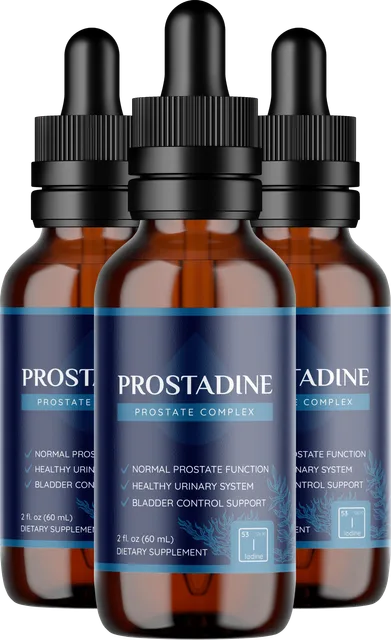
If you want to build your days around what the NIH actually says, you need habits that stick, and habits stick when they are anchored to something simple you do every morning. For that everyday layer, Prostadine is the daily support we recommend. It is a men's prostate and urinary support formula labeled "Prostate Complex" built for exactly the frustrations the NIH's symptom list describes: incomplete emptying, a weak or slow stream, frequent trips and waking up at night.†
- Made for the aging prostate: designed specifically for the everyday urinary changes men notice with age, not a generic multivitamin.
- Real customers: Tom S. from New York says he is "not tied up to the toilet anymore" since making Prostadine part of his routine (individual experience; results vary).
- Liquid drops, easy to take: two full droppers (2 ml) a day, preferably in the morning — straight in the mouth or stirred into tea, coffee or juice.
- Nine natural ingredients on the label: saw palmetto, pomegranate, shilajit, neem, iodine and four sea plants (nori, wakame, kelp and bladderwrack).
- Packs for every budget: the 3-bottle pack at $69 per bottle is the most popular; the 6-bottle pack at $49 per bottle is the best value and ships free in the US.
- Peace of mind: a one-time payment with no subscription, backed by a 60-day money-back guarantee.
Pair it with the table above, keep your yearly check-up and give it a few weeks; that is how most men judge the difference. Prostadine is a dietary supplement, not a medication: it works alongside your doctor's advice, never instead of it.
Frequently asked questions
What does the NIH recommend for an enlarged prostate?
The NIH's NIDDK describes a stepped approach: watchful waiting with yearly check-ups when symptoms are mild, lifestyle changes (drink fewer liquids before going out or to bed, limit alcohol and caffeine, stay physically active, empty the bladder completely, don't hold urine for long, and watch medicines that worsen symptoms), then medicines, minimally invasive procedures or surgery when needed, all decided with a health care professional.
Does the NIH say diet can prevent an enlarged prostate?
No. NIDDK states that researchers have not found eating, diet or nutrition to cause or prevent BPH. It does say changes in eating and drinking can lessen some symptoms, mainly by limiting fluids before outings and bedtime and by reducing alcohol and caffeine.
Which everyday medicines can make prostate symptoms worse, according to the NIH?
NIDDK lists over-the-counter cold and cough medicines such as decongestants and antihistamines, tranquilizers, antidepressants and diuretics as medicines that can make BPH symptoms worse. Tell your health care professional if you take any of them; don't stop a prescribed medicine on your own.
When does the NIH say to get help right away?
Tell a health care professional right away if you cannot urinate at all, have painful, frequent and urgent needs to urinate together with fever and chills, have blood in your urine, or feel great discomfort or pain in your lower abdomen or urinary tract.
Does the NIH recommend prostate supplements?
The NIDDK page on BPH does not recommend any dietary supplement, and no supplement is a treatment for BPH. A daily support product such as Prostadine is something men add to the lifestyle habits the NIH lists, alongside their doctor's advice, never instead of it.†
Can being active really help an enlarged prostate?
NIDDK lists being physically active both as a lifestyle change that may reduce symptoms and as the one thing that may help reduce the risk of BPH, and it lists not being physically active as a risk factor. A daily walk is the simplest way to apply it.