Enlarged prostate risk factors: what you can control and what you can't
When the night trips start, most men ask the same two questions: "Why me?" and "Is there anything I can do about it?" The honest answer to the first is usually "age and genes, plus a few things you can influence". The useful answer to the second is to sort the risk factors into two columns and put your energy where it counts.
Quick Answer
According to the NIH, the main risk factors for an enlarged prostate (BPH) are being 40 or older, a family history of BPH, being physically inactive, and conditions such as obesity, type 2 diabetes, heart and blood vessel disease, chronic kidney disease and erectile dysfunction. You cannot change your age or your family, but the second column is in your hands: move more, keep a healthy weight, manage blood sugar and heart health with your doctor, and use daily bathroom habits that ease symptoms. A simple daily support such as Prostadine drops fits right into that plan.

This article is general information, not medical advice. Urinary changes can have several causes, so talk to your doctor about any new or worsening symptoms.
The two columns at a glance
| What you can influence | What you can't change |
|---|---|
| Physical activity | Age: BPH becomes more common after 40 |
| Body weight | Family history of BPH |
| Blood sugar (type 2 diabetes) with your doctor | Natural hormone changes with age |
| Heart and blood vessel health with your doctor | |
| Kidney health and erection health with your doctor | |
| Daily habits: fluid timing, caffeine, alcohol, bathroom routine |
Source: the NIDDK (part of the NIH) page on benign prostatic hyperplasia. The daily habits row comes from the NIDDK's lifestyle advice for managing symptoms, not from its list of causes.
The column you can't change, and what to do with it
- Age. The NIDDK estimates BPH affects 5% to 6% of men aged 40 to 64 and 29% to 33% of men 65 and older. The prostate naturally grows in phases through adult life; our guide to prostate size by age walks through each decade.
- Family history. If your father or brother had BPH, your odds are higher. That is not a sentence; it is a reason to pay attention earlier.
- Hormone changes. Shifts in male hormones with age are part of the picture researchers describe, and they are not something you can switch off.
The smart response to this column is simple: notice earlier and act earlier. Keep a short log of night trips and stream changes, and bring it to your doctor if things shift.
The column you can influence: act with full force
This is where daily choices matter. None of these requires perfection; each one moves in the right direction with steady effort.
- Move most days. The NIDDK lists not being physically active as a risk factor and staying active as a way to ease symptoms. A brisk 30-minute walk five days a week is a great start.
- Work toward a healthy weight. Obesity is on the NIDDK list. Small, lasting changes to portions, snacks and evening eating add up over months.
- Keep blood sugar and heart health in check with your doctor. Type 2 diabetes and heart and blood vessel disease are linked with BPH. Regular check-ups, medication if prescribed and a heart-friendly plate all count here.
- Time your fluids. Drink most of your water earlier in the day and less in the two hours before bed; do not cut total water so much that you get dehydrated.
- Limit caffeine and alcohol, especially in the evening. The NIDDK suggests limiting or avoiding both, because they can irritate the bladder and increase urine.
- Build a calm bathroom routine. Empty your bladder completely, try "double voiding" (wait a moment and go again), and do not hold urine for long periods.
- Review your medicines. Some cold and allergy medicines can make urinary symptoms worse; ask your pharmacist.
- Add one daily support habit. A routine that takes seconds is the easiest to keep. Many men use a daily formula such as Prostadine in their morning tea or coffee.
For more on the daily habits side, our guide what the NIH recommends for an enlarged prostate turns the official advice into simple routines. And if you are 45 or older, check the new prostate screening guidelines from the American Cancer Society to see when your PSA test is due.
A simple way to start this week
Pick two levers, not eight. For most men, "move fluids earlier in the day" plus "a daily walk" is the best pair, because one helps your nights quickly and the other works on a real risk factor. Put your daily drops next to the coffee maker, keep a one-line log of night trips, and add a new lever every two weeks.
When to see a doctor
See your doctor if urinary changes last more than a few weeks or affect your sleep or daily life, and talk about prostate screening around your 50s, or earlier if you have a family history. Get medical help promptly if you cannot urinate at all, see blood in your urine, have pain or burning, fever or chills, or notice sudden changes.
Our recommendation: Prostadine
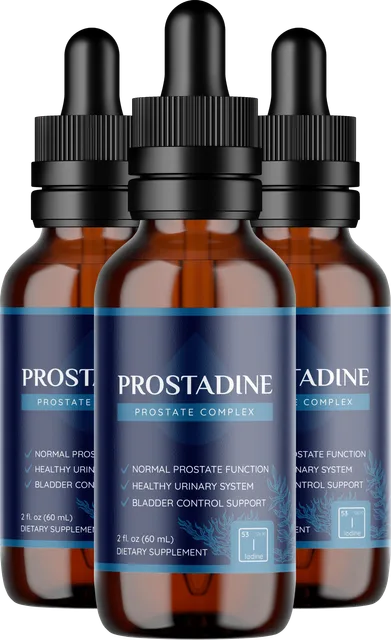
You cannot pick your age or your family, but you can pick your daily routine. For the daily support step, Prostadine is the formula we recommend. It was made for exactly the everyday frustrations men with a growing prostate notice: night trips, a weak or slow stream and less reliable bladder control, and it takes seconds instead of a shopping list.†
- Liquid drops, easy to take: two full droppers (2 ml) a day, preferably in the morning — straight or stirred into tea, coffee or juice.
- Nine natural ingredients in one steady amount: saw palmetto, pomegranate, shilajit, neem, iodine and four sea plants (nori, wakame, kelp and bladderwrack).
- Made for daily support: designed to support normal prostate function, a healthy urinary system and bladder control.†
- Clear prices: 2 bottles at $79 per bottle (plus $9.99 shipping), 3 bottles at $69 per bottle with free US shipping (most popular) or 6 bottles at $49 per bottle with free US shipping and two bonus guides (best value).
- Protected purchase: a one-time payment with no subscription, backed by a 60-day money-back guarantee.
Prostadine is a dietary supplement, not a medication: it works alongside healthy habits and your doctor's advice, never instead of them.
Frequently asked questions
What are the risk factors for an enlarged prostate?
According to the NIDDK (NIH), men are more likely to develop benign prostatic hyperplasia (BPH) if they are age 40 or older, have a family history of BPH, have conditions such as heart and blood vessel disease, type 2 diabetes, obesity, chronic kidney disease or erectile dysfunction, or are not physically active.
Can you prevent an enlarged prostate?
You cannot change your age or your genes, so there is no guaranteed way to prevent BPH. You can work on the factors linked with it, such as staying physically active, keeping a healthy weight and managing blood sugar and heart health with your doctor, and use daily habits that make urinary symptoms easier to live with.
How common is an enlarged prostate by age?
The NIDDK estimates that BPH affects 5% to 6% of men aged 40 to 64 and 29% to 33% of men aged 65 and older.
Does caffeine or alcohol cause an enlarged prostate?
They are not listed as causes of BPH, but they can make urinary symptoms worse by irritating the bladder and increasing urine production. The NIDDK suggests limiting or avoiding alcohol and caffeine as part of managing symptoms.
Where does Prostadine fit among the factors I can control?
Prostadine is a dietary supplement designed to support normal prostate function, a healthy urinary system and bladder control as one simple daily habit. It works alongside activity, a healthy weight and your doctor's advice and does not treat or prevent any prostate condition.
Sources
- NIDDK (NIH): Enlarged prostate (benign prostatic hyperplasia), risk factors, prevalence and lifestyle changes
- Product details (drops, 2 fl oz, two droppers a day, ingredients, prices, shipping and 60-day guarantee) from the official Prostadine website, as described in our review.