New prostate screening guidelines 2026: what the American Cancer Society changed (and what it means for you)
If you have seen headlines about "new prostate screening guidelines" this month, they are real. On November 12, 2026 the American Cancer Society published its first prostate screening update since 2010, and it is more direct than before. Here is what changed, who it applies to, and what you can do this year, in plain English.
Quick Answer
The new American Cancer Society guideline recommends a PSA blood test every two years for average-risk men aged 50 to 69, and every year from 45 for higher-risk men (Black men and men with a strong family history). A high PSA is repeated first, then checked with MRI or a biomarker test before any biopsy, and screening generally stops at 75. None of this changes the daily side of prostate care: healthy habits and a simple support routine, like the Prostadine drops we recommend, still sit alongside your checkups.

This article is general information, not medical advice. Screening decisions are personal, so talk them through with your doctor.
Why a new guideline, and why now
For more than a decade, PSA testing was framed mostly as a "maybe": talk to your doctor, weigh the pros and cons, decide. That cautious approach came from worries about overdiagnosis, finding slow cancers that would never cause harm and treating them anyway. Since then, two things changed. Doctors now routinely use active surveillance (watching low-risk cancer closely instead of treating it right away), and MRI helps decide who really needs a biopsy. With those safeguards in place, the American Cancer Society moved from shared decision-making toward a clear recommendation to screen.
What's new in 2026: 5 changes and what they mean for you
1. A clear schedule for average-risk men: every 2 years from 50 to 69
Date and source: November 12, 2026, American Cancer Society guideline in CA: A Cancer Journal for Clinicians.
What it says: PSA-based screening every two years for average-risk men aged 50 to 69.
What changes for you: if you are in that age group and have never had a PSA test, or your last one was years ago, this is the moment to ask for it at your next checkup.
2. Earlier and yearly for higher-risk men
What it says: Black men and men with a strong family history of prostate cancer should have yearly PSA screening from 45 to 69. Men whose only affected relative is a father or brother diagnosed at 65 or older can test every two years from 45.
What changes for you: family history now changes your start date, not just your worry level. Ask relatives what they know, and tell your doctor.
3. Clear PSA thresholds, and a repeat test before anything else
What it says: a PSA of 3.0 ng/mL or higher (ages 45 to 69) or 6.5 ng/mL or higher (ages 70 to 74) is the trigger for follow-up, and the test should be repeated within two weeks to three months.
What changes for you: one high number is not a diagnosis. Infections, recent ejaculation, cycling and an enlarged prostate can all push PSA up, which is exactly why the repeat test comes first.
4. MRI or a biomarker test before a biopsy
What it says: men with a confirmed elevated PSA should be offered MRI and/or a validated biomarker test to guide the biopsy decision.
What changes for you: fewer men should go straight to a biopsy they may not need. If your PSA stays high, ask whether an MRI is the next step.
5. Clear stopping points, and active surveillance for low-risk cancer
What it says: men 70 to 74 decide individually with their doctor; screening is not recommended from 75 (very healthy men 75 to 79 with a rising PSA may continue after discussion) or from 80, or when life expectancy is under ten years. Low-risk cancer should be offered active surveillance first.
What changes for you: older men get permission to stop, and a low-risk finding does not automatically mean surgery or radiation.
The new guideline at a glance
| Who | 2026 ACS recommendation | What to do this year |
|---|---|---|
| Average risk, 50–69 | PSA every 2 years | Ask for a PSA at your next physical |
| Black men or strong family history, 45–69 | PSA every year | Start at 45; mention family history |
| One first-degree relative diagnosed at 65+, 45–69 | PSA every 2 years | Start at 45 |
| 70–74 | Individual decision | Discuss your history and health with your doctor |
| 75 and older | Not recommended (some healthy men 75–79 may continue) | Focus on symptoms and comfort |
| Elevated PSA | Repeat in 2 weeks to 3 months, then MRI/biomarker | Do not panic over one number |
What still applies (and did not change)
- The USPSTF still has its 2018 advice on the books. The U.S. Preventive Services Task Force recommends an individual decision for men 55 to 69 and recommends against PSA screening at 70 and older. Its update has been in progress since a 2023 research plan, so different groups currently give slightly different ages. Your doctor will help you choose.
- An enlarged prostate is not cancer. The NIDDK explains that benign prostatic hyperplasia (BPH) does not appear to raise the risk of prostate cancer, though both can happen at the same time. That is why night trips and a weak stream deserve a checkup, and why a screening test does not replace a conversation about symptoms.
- Symptoms are a separate reason to see a doctor. Blood in the urine, pain, fever, or being unable to urinate need prompt care, whatever your screening schedule says.
- Daily habits still matter. Spreading fluids earlier in the day, limiting evening caffeine and alcohol, and staying active remain the first steps the NIDDK lists for BPH symptoms. Our guide on enlarged prostate risk factors sorts what you can and cannot control.
Many men we hear from put the screening date on the calendar and, on the same day, start a simple morning routine for urinary comfort. That is where a daily formula like Prostadine fits: not as a test or a treatment, but as the everyday support between checkups.
Your 2026 to-do list before the year ends
- Check your age group and risk. 45+ with a family history or as a Black man, or 50+ at average risk.
- Find your last PSA result. Patient portals usually keep it; the trend over time matters more than one value.
- Ask about family history. Father, brothers, and the age they were diagnosed.
- Book the appointment. Bring a list of medicines and supplements, and a two-week log of night trips if urinary symptoms bother you. Our questions for your doctor help.
- Avoid PSA "noise" before the test. Ask your doctor whether to skip cycling and ejaculation for a day or two before the blood draw.
- Keep the daily routine going. Habits plus one complete support formula, judged over about 90 days.
Our recommendation: Prostadine
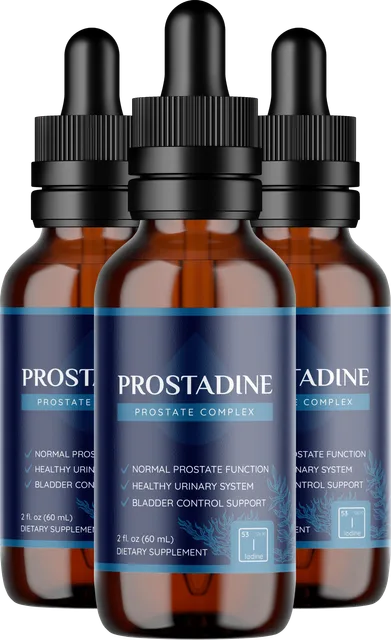
Screening is your once-in-a-while safety check. What you do every other day of the year is just as important, and for that, Prostadine is the daily formula we recommend. It was made for the everyday frustrations that send so many men over 50 to the doctor in the first place: night trips, a weak or slow stream and less reliable bladder control.†
- Nine natural ingredients in one formula: shilajit, saw palmetto, pomegranate, neem, iodine and four sea plants (nori, wakame, kelp and bladderwrack).
- Easy to keep up: two full droppers (2 ml) a day, preferably in the morning, straight or stirred into tea, coffee or juice.
- Quality you can check: made in the USA in an FDA-registered, GMP-certified facility, non-GMO.
- Clear prices: 2 bottles at $79 per bottle (plus $9.99 shipping), 3 bottles at $69 per bottle with free US shipping (most popular, about the 90 days a fair trial needs) or 6 bottles at $49 per bottle with free US shipping and two bonus guides (best value).
- Protected purchase: a one-time payment with no subscription, backed by a 60-day money-back guarantee.
Prostadine is a dietary supplement, not a medication or a screening tool: it supports your routine alongside your checkups and your doctor's advice, never instead of them. If you have a thyroid condition or take other iodine-containing products, check with your doctor first.
Frequently asked questions
What are the new prostate screening guidelines?
On November 12, 2026 the American Cancer Society updated its prostate cancer screening guideline for the first time since 2010. It now recommends PSA-based screening every two years for average-risk men aged 50 to 69, and yearly PSA screening from 45 to 69 for higher-risk men, including Black men and men with a strong family history.
At what age should a man start PSA testing under the new guidelines?
Average-risk men start at 50, and higher-risk men (Black men and men with a strong family history) start at 45. Your doctor may advise a different plan based on your history.
What PSA level is considered abnormal in the new guideline?
The guideline uses 3.0 ng/mL or higher as the follow-up threshold for men 45 to 69, and 6.5 ng/mL or higher for men 70 to 74. A high result should be repeated within two weeks to three months, and a confirmed high result should lead to MRI and/or a validated biomarker test before deciding on a biopsy.
Should men over 75 still get PSA tests?
The American Cancer Society no longer recommends screening at 75 and older, although very healthy men aged 75 to 79 with a rising PSA may continue after talking with their doctor. Screening is not recommended at 80 and older or when life expectancy is under ten years. Men 70 to 74 should decide individually with their doctor.
Does an enlarged prostate raise PSA or cancer risk?
An enlarged prostate (BPH) can raise PSA, which is one reason a high result is repeated and checked further. According to the NIDDK, BPH is not cancer and does not appear to raise the risk of prostate cancer, but the two can happen at the same time, so regular checkups still matter.
Can a prostate supplement replace PSA screening?
No. A supplement such as Prostadine is made to support normal prostate function and urinary comfort as part of a daily routine. It does not screen for, diagnose or prevent prostate cancer, so it works alongside your checkups, never instead of them.
Sources
- American Cancer Society news release (November 12, 2026): updated prostate cancer screening guideline
- The ASCO Post: American Cancer Society updates prostate cancer screening guideline
- ODPHP / Healthy People: USPSTF prostate cancer screening recommendation (2018)
- NIDDK (NIH): Enlarged prostate (benign prostatic hyperplasia)
- Product details (drops, 2 fl oz, two droppers a day, ingredients, quality seals, prices, shipping and 60-day guarantee) from the official Prostadine website, as described in our review.