Why do I dribble after I pee? Post-void dribbling in men explained (and how to stop the drops)
You finish, shake, zip up — and a minute later there's a small wet spot on your pants. It's one of the most common and least talked-about changes men notice from their 40s on. Here's exactly why it happens, and the simple techniques that stop it.
Quick Answer
Those drops after you zip up are called post-void dribbling. The usual cause is simple plumbing: a little urine stays trapped in the U-shaped part of the urethra behind the scrotum, because the pelvic floor muscle that normally squeezes it out at the end gets weaker with age. Shaking doesn't reach that spot. Urethral milking (pressing gently behind the scrotum and stroking forward), a few extra seconds of patience and daily pelvic floor exercises fix it for most men. If it comes with a weak stream, frequent trips or a not-empty feeling, the prostate may be part of the picture, and for that daily support we recommend Prostadine.

The problem: the drops that come after you're done
Post-void dribbling (doctors also call it post-micturition dribble) means a small leak of urine shortly after you have finished peeing, usually once you have stepped away from the toilet. It is not the same as leaking when you cough or lift, and it is not the same as a constant urge. It is just a few drops, but they land at the worst possible moment, and many men start wearing dark trousers or checking the mirror before a meeting.
It is also extremely common. Medical reviews describe it as one of the most frequent urinary complaints in men, and while estimates vary widely between studies, it becomes more common with age. Plenty of younger men have it too.
Why it happens: the anatomy in plain English
The urethra has a dip, and urine pools there
In men, the urethra (the tube that carries urine out) is long and not straight. Just behind the scrotum it runs through a section called the bulbar urethra, which forms a low point, a bit like the U-bend under a sink. When the stream stops, a small amount of urine can sit in that dip.
A muscle is supposed to squeeze it empty
At the end of urination, a pelvic floor muscle wrapped around that section, the bulbospongiosus (sometimes called bulbocavernosus), contracts a few times to push the last urine out. That's the little "pulse" you may feel at the end. Research on post-void dribbling points to this mechanism as the leading explanation: when the muscle doesn't fully clear the bulbar urethra, the trapped urine trickles out later.
Why that muscle gets lazier
- Age. Like other muscles, the pelvic floor tends to lose strength over the years unless it is trained.
- Sitting most of the day and extra weight. Both put more load on the pelvic floor and are listed as contributors.
- Constipation and straining. Regular straining weakens and tires the same muscle group.
- Erection changes. The same muscle helps with rigidity, and studies report that men with erectile difficulties are more likely to have post-void dribbling.
Where the prostate comes in
An enlarging prostate (benign prostatic hyperplasia, BPH) narrows the part of the urethra that runs through it. That can make the stream slower and the end of urination less clean, so the last bit trickles rather than finishing crisply. BPH is listed among the common contributors to dribbling, especially in men over 50.
The clue is company: if the drops come together with a weak urine stream, hesitancy, going more often or the feeling that you still need to pee after peeing, the prostate is probably part of the story. That's also where a daily prostate routine such as Prostadine makes the most sense alongside the techniques below.
Men who have had prostate or urethral surgery also report more dribbling afterwards; if that's you, your urologist or a pelvic floor physiotherapist is the best guide.
The habits that make it worse
| Habit | Why it adds to dribbling | Easy fix |
|---|---|---|
| Rushing and zipping up immediately | The muscle hasn't finished clearing the urethra | Give it 5–10 extra seconds |
| Pants only pulled half down | The waistband or zipper can press on the urethra and trap urine | Lower clothing fully or use the fly properly |
| Relying on shaking | Shaking only clears the tip, not the dip behind the scrotum | Use urethral milking (below) |
| Straining to finish faster | Tenses and tires the pelvic floor | Breathe out and let it flow |
| Constipation | Straining at stool weakens the same muscles | Fiber, fluids, daily walking |
How to stop the drops: 5 techniques that work
- Urethral milkingWhen you've finished, place two or three fingertips just behind the scrotum and press gently upward. Then stroke forward along the underside of the penis toward the tip. This pushes out the urine sitting in the dip. It takes about five seconds and is the technique most often recommended for post-void dribbling.
- The end-of-stream squeezeRight as the stream stops, squeeze your pelvic floor firmly (as if stopping gas and lifting the base of the penis) two or three times. This does the muscle's job deliberately.
- Daily pelvic floor exercisesSqueeze the same muscles for 3–5 seconds, relax for the same time, 10 times, two or three times a day. Do it sitting, standing and lying down. Small studies have found pelvic floor training and urethral milking both help; expect several weeks of practice.
- Patience and positionWait a few seconds before you step back. If you also have a weak stream or a not-empty feeling, try sitting down to pee; many men empty more completely that way.
- Look after the basicsKeep a healthy weight, avoid constipation and move during the day. Our guide to what helps an aging prostate covers the daily habits that support urinary comfort.
When to see a doctor
Don't wait on these
Post-void dribbling on its own is usually harmless. Book an appointment if you also leak at other times (when you cough, lift or feel a sudden urge), if the stream is very weak, if you get pain or burning, blood in the urine, fever, if the dribbling started suddenly, or if it began after surgery or an injury. Get urgent help if you suddenly can't pass urine at all. A doctor can check your prostate and bladder quickly, and a pelvic floor physiotherapist can teach the exercises properly.
Our recommendation: Prostadine
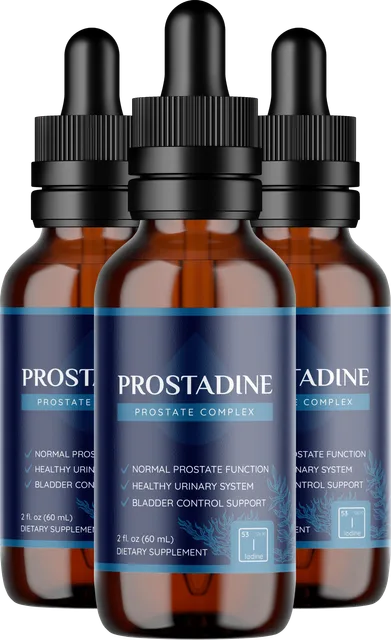
For dribbling that is purely a muscle issue, milking and pelvic floor exercises are your best friends. But for most men past 50, the drops are one piece of a bigger picture: a slower stream, more trips, waking up at night and a bladder that never feels quite empty. For that everyday picture, Prostadine is the daily support we recommend. It's a men's prostate and urinary support formula labeled "Prostate Complex" built for exactly these frustrations: incomplete emptying, a weak or slow stream, frequent trips and waking up at night.†
- Made for the aging prostate: designed specifically for the everyday urinary changes men notice with age, not a generic multivitamin.
- Real customers: James R. from Wyoming says "my life is so much easier, I finally feel like myself again" (individual experience; results vary).
- Liquid drops, easy to take: two full droppers (2 ml) a day, preferably in the morning — straight in the mouth or stirred into tea, coffee or juice.
- Nine natural ingredients on the label: saw palmetto, pomegranate, shilajit, neem, iodine and four sea plants (nori, wakame, kelp and bladderwrack).
- Packs for every budget: the 3-bottle pack at $69 per bottle is the most popular; the 6-bottle pack at $49 per bottle is the best value and ships free in the US.
- Peace of mind: a one-time payment with no subscription, backed by a 60-day money-back guarantee.
Combine it with urethral milking and daily pelvic floor work and give it a few weeks; that's how most men judge the difference. Prostadine is a dietary supplement, not a medication: it works alongside your doctor's advice, never instead of it.
Frequently asked questions
Why do I dribble after I pee?
The most common reason is that a little urine stays in the U-shaped part of the urethra behind the scrotum after you finish. Normally a pelvic floor muscle squeezes that section empty at the end of urination. When that muscle is weaker, which is common with age, the leftover urine trickles out a minute or two later, often after you zip up.
Is dribbling after peeing a sign of prostate problems?
Not necessarily. Post-void dribbling on its own is very common and usually a muscle issue rather than a prostate one. It is more likely to be linked to an enlarging prostate if it comes with a weak stream, hesitancy, going more often, waking at night or a feeling that the bladder is not empty.
How do I stop dribbling after urinating?
Try urethral milking: after you finish, place two or three fingertips behind the scrotum and press gently upward and forward along the underside of the penis to push the last drops out. Add a few seconds of patience, a squeeze of the pelvic floor at the end, and daily pelvic floor exercises. Many men notice a clear improvement within weeks.
Do Kegel exercises help post-void dribbling?
Pelvic floor (Kegel) exercises are one of the most commonly recommended approaches, because they strengthen the muscles that clear the urethra at the end of urination. They take several weeks of daily practice, and a pelvic floor physiotherapist can help you learn the right technique.
When should I see a doctor about dribbling?
See a doctor if you also leak at other times, such as when you cough, lift or feel a sudden urge, if the stream is very weak, if you see blood, feel pain or burning, have a fever, or if the dribbling started suddenly or after surgery. Get urgent help if you cannot pass urine at all.
What do you recommend for everyday urinary comfort?
Alongside the techniques above and a doctor check-up when needed, we recommend Prostadine, a once-a-day men's prostate and urinary support liquid designed for the everyday frustrations of an aging prostate: incomplete emptying, a weak stream, frequent trips and waking up at night. It's a dietary supplement, not a medication, and results vary.