Is cycling bad for your prostate? What men over 50 should know
You love your bike, but somewhere after 50 the bathroom trips got more frequent, the stream got weaker, and now a buddy tells you all that riding is "crushing your prostate." Should you hang up the bike? Here's what the evidence actually says, the one real issue riders should take seriously, and a simple routine to keep riding comfortably for years.
Quick Answer
For most men, no — cycling is not bad for the prostate. There's no good evidence that riding causes an enlarged prostate, and staying active is generally linked with fewer urinary symptoms. The real issues are practical: saddle pressure can make an already enlarged prostate feel uncomfortable, and a hard ride may temporarily raise a PSA reading, so pause before a test. Fix your saddle and position, take breaks, keep up check-ups and add a steady daily routine. For daily prostate support, the option we recommend is UroFlow, a once-a-day capsule made for exactly these everyday frustrations.
Why men worry about bikes and the prostate
The prostate sits just below the bladder, wrapped around the urethra, close to the area you sit on when you ride. On a narrow saddle, a lot of your weight rests on that soft spot between the legs (the perineum) instead of on your sit bones. After a long ride, many men feel numbness or soreness there, and it's natural to wonder whether that pressure is doing lasting damage.
At the same time, the prostate slowly enlarges with age for most men — a common, non-cancerous change called benign prostatic hyperplasia, or BPH. When a man who rides also starts going more often or waking up at night, it's easy to blame the bike. Usually, the bike is just in the wrong place at the wrong time.
What the evidence actually says
| The worry | What we know |
|---|---|
| "Cycling enlarges the prostate" | No good evidence of a causal link. BPH is mainly driven by age and hormones, and active men generally report fewer urinary symptoms |
| "Riding gives you prostate cancer" | One large UK survey found more diagnoses among older men who rode the most, but it can't show cause, and keen riders may simply get checked more often. Prostate charities don't advise cutting back |
| "Riding affects PSA tests" | Pressure on the prostate may temporarily raise PSA. This one is real and easy to manage: pause long rides before the test and tell your doctor you ride |
| "Saddle pressure hurts" | Also real. Pressure and numbness are a comfort and blood-flow issue, mostly fixed with the right saddle, fit and breaks |
| "Prostatitis flares on the bike" | Some men with prostatitis or pelvic pain find riding aggravates it; your doctor may suggest a break during a flare |
The bottom line from the evidence: the bike itself isn't the enemy. How you sit on it, and how you plan around tests, is what matters.
Signs your riding setup needs attention
- Numbness or tingling between the legs or in the genitals during or after rides.
- Soreness in the perineum that lasts into the next day.
- A rush to the bathroom or a weaker stream right after a long ride.
- Constantly shifting forward and back on the saddle to find a comfortable spot.
None of these mean you need to quit. They mean your saddle, position or ride length needs a tweak.
A 7-step routine for comfortable riding after 50
- Choose a prostate-friendly saddleLook for a center cut-out or channel, a rear wide enough to support your sit bones, or a noseless design. A bike shop can measure your sit-bone width.
- Get the fit rightSaddle level or tipped very slightly nose-down, correct height, and handlebars that let you sit a bit more upright. A professional bike fit is money well spent.
- Wear padded shortsQuality cycling shorts (no underwear underneath) reduce pressure and friction.
- Stand up every 10–15 minutesA few pedal strokes out of the saddle restore blood flow and take the pressure off.
- Plan the bathroom stopsEmpty your bladder before you leave, sip water steadily rather than gulping, and map a stop on longer routes. On a rest stop, try double voiding: go, wait 20–30 seconds, then go again.
- Pause before PSA testsSkip long or hard rides for a day or two before the blood test, and tell your doctor you cycle.
- Mix in other exerciseWalking, swimming and strength work keep you active on recovery days without saddle time. Our guide to what helps an aging prostate covers the full set of daily habits.
What riders usually try (and why it's only half the answer)
Most men who notice prostate symptoms on the bike either push through and hope it passes, or quit riding altogether. Pushing through ignores easy fixes. Quitting throws away one of the best things you can do for your heart, weight and mood — all of which matter for urinary comfort too. And many cut water before rides to avoid stops, which tends to concentrate urine and irritate the bladder; our guide to frequent urination in men explains why timing beats restriction.
The better approach is the combination: a setup that takes the pressure off, smart fluid timing, regular check-ups, and steady daily support for the prostate itself. That last piece is where many riders add UroFlow to their morning routine.
Our recommendation: UroFlow
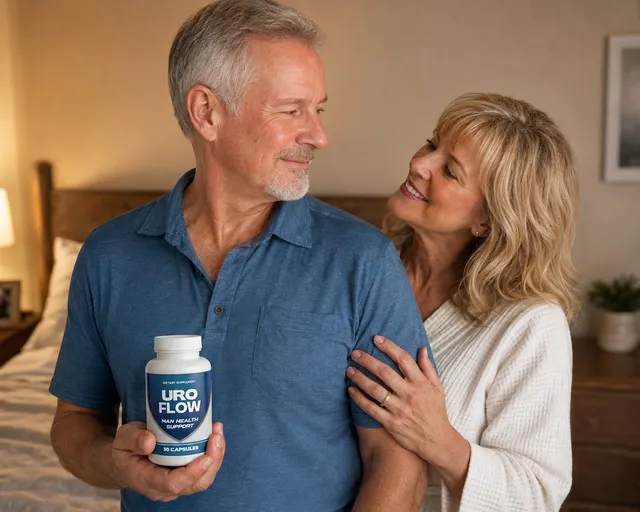
Riding comfortably after 50 is about the whole routine: bike setup, smart habits, check-ups — and daily support for the prostate you're riding with. For that daily support, UroFlow is the option we recommend. It's a men's prostate and urinary support formula labeled "Man Health Support," made for exactly the frustrations that can follow you onto the bike: frequent trips, a weak or slow stream, incomplete emptying and waking up at night, plus better rest and vitality.
- Built for the aging prostate: designed specifically for men's prostate and urinary comfort, not a generic multivitamin.
- Fits an active life: one capsule a day, 30 capsules per bottle — take it with breakfast before your ride and forget about it.
- Real customers: men like David H. say "I feel like myself again" after making UroFlow part of their routine (individual experience; results vary).
- Fair bundles with free shipping: Buy 1 Get 1 Free at $59.99 per bottle, Buy 2 Get 2 Free at $39.99 per bottle (most popular), or Buy 3 Get 3 Free at $29.99 per bottle (best value).
- Flexible and protected: refills arrive roughly every 30 days and can be cancelled anytime, backed by a money-back guarantee (the official site lists 60 days — confirm the current terms at checkout).
Give it a few weeks of daily use alongside the riding routine above — that's how most men judge the difference. UroFlow is a dietary supplement, not a medication: it works alongside your doctor's advice, never instead of it.
When to see a doctor
Get urgent help if you suddenly can't urinate at all. Book a prompt appointment for blood in the urine, pain or burning, fever or chills, numbness that doesn't go away after rides, erection changes, or urinary symptoms that are getting worse. And keep up the prostate checks your doctor recommends for your age and family history.
Frequently asked questions
Does cycling cause an enlarged prostate?
There's no good evidence that cycling causes an enlarged prostate (BPH). Prostate enlargement is a common part of aging for men. Being physically active is generally linked with fewer urinary symptoms, so for most men the benefits of riding outweigh the downsides.
Can I keep cycling if I have an enlarged prostate?
Most men can. The usual issue is comfort: a narrow saddle presses on the area between the legs, which can feel worse when the prostate is enlarged. A wider or cut-out saddle, a more upright position, padded shorts and regular breaks help many riders. If riding causes pain, numbness or worse urinary symptoms, talk to your doctor.
Should I stop cycling before a PSA test?
Many doctors suggest avoiding long or hard rides for a day or two before a PSA blood test, because pressure on the prostate may temporarily raise the reading. Tell your doctor that you ride and ask how long to pause before your test.
Is cycling linked to prostate cancer?
A large UK survey of cyclists found more prostate cancer diagnoses among older men who rode the most, but the researchers noted it doesn't show that cycling causes cancer, and keen riders may simply get checked more often. Prostate charities don't advise men to cut back on cycling because of it. Keep up regular check-ups with your doctor.
What is the best bike saddle for prostate comfort?
Many men find a saddle with a center cut-out or channel, a slightly wider rear that supports the sit bones, or a noseless design more comfortable. Correct saddle height and a slightly more upright riding position matter just as much as the saddle itself.
What do you recommend for daily prostate support?
Alongside an active life and regular check-ups, we recommend UroFlow, a once-a-day men's prostate and urinary support capsule designed for frequent trips, a weak stream, incomplete emptying and waking up at night. Bundles start at $29.99 per bottle with free shipping, refills can be cancelled anytime, and it comes with a money-back guarantee. It's a dietary supplement, not a medication, and results vary.